Reishi Supplements: Formulation & Sourcing Guide
Its polished red cap is only part of what makes reishi distinctive. This woody fungus grows on hardwood trees and occurs naturally across Europe, Asia and North America. Also known as lingzhi and Ganoderma lucidum, reishi has a long history of traditional use. Its identity and growing conditions are useful context when assessing it as a supplement ingredient.
If you’re exploring reishi, it’s reasonable to want more than a list of possible benefits. The mushroom is edible, but its tough texture and bitter taste make supplements a more practical format for many people. Research has explored possible effects on areas such as immune function, fatigue and mood. Those findings provide context, not proof of a health outcome from taking reishi.
This guide explains what reishi is, where it grows and how it has been used, then looks at what research suggests about its potential effects. You’ll also learn why species identity, ingredient sourcing and formulation matter when assessing an ingredient or developing a product for your brand.
Table of Contents
Reishi and sleep, anxiety and depression
Sleep, mood and stress are areas of interest, but the evidence has limits. Understanding reported effects, possible risks and label details helps put this medicinal mushroom in context.
Reishi and reported sleep effects
Some users report feeling more relaxed or sleeping better, but these outcomes don’t establish a treatment for insomnia. Triterpenes, including ganoderic acids, are studied for possible calming effects on the nervous system. Evening use is sometimes suggested around 30 to 60 minutes before bed. That timing is a practical convention, not evidence that taking a supplement at that point will improve sleep.
Stress, mental clarity and sleep
Stress can disrupt rest and leave someone less focused the next day. Reishi contains polysaccharides and triterpenes, but research hasn’t established that these compounds improve mental clarity or resolve stress-related sleep problems. Immune effects, including possible changes involving white blood cells, are also being studied. They don’t demonstrate that immune changes improve sleep or concentration.
Reishi, anxiety and depression
Interest in anxiety and mood concerns possible effects, not an established treatment for mental health conditions. Participants who took an extract for eight weeks reported lower anxiety and improved mood. This describes a reported study outcome; it doesn’t show that supplements can replace support or treatment for anxiety or depression. Persistent symptoms deserve appropriate clinical attention, particularly when they affect daily life.
Are supplements regulated or approved in the UK? A supplement’s label or sale doesn’t establish that it is an approved medicine or authorised treatment for sleep, anxiety or depression. Consider it a food supplement, not a substitute for medical care.
What are the side effects and risks? Some people report nausea with prolonged use, while short-term use usually goes well. Caution is advised for people with low blood pressure or those taking diabetes medication or immunosuppressants.
Do these supplements interact with medicines such as blood thinners or immunosuppressants? People taking medicines should discuss supplement use with a doctor or pharmacist first. Particular caution applies to immunosuppressants and medicines that affect blood clotting.
How can you identify a high-quality supplement? Read the label for the ingredient identity, preparation, serving directions and extract concentration. Ratios such as 10:1 or 20:1 indicate extract concentration; follow the stated dosage rather than transferring directions between products.
Is it safe during pregnancy, breastfeeding or before surgery? People who are pregnant or breastfeeding should consult a doctor before use. Guidance also advises stopping supplements before surgery, so discuss timing with a healthcare professional.
Blood pressure, cholesterol and liver health
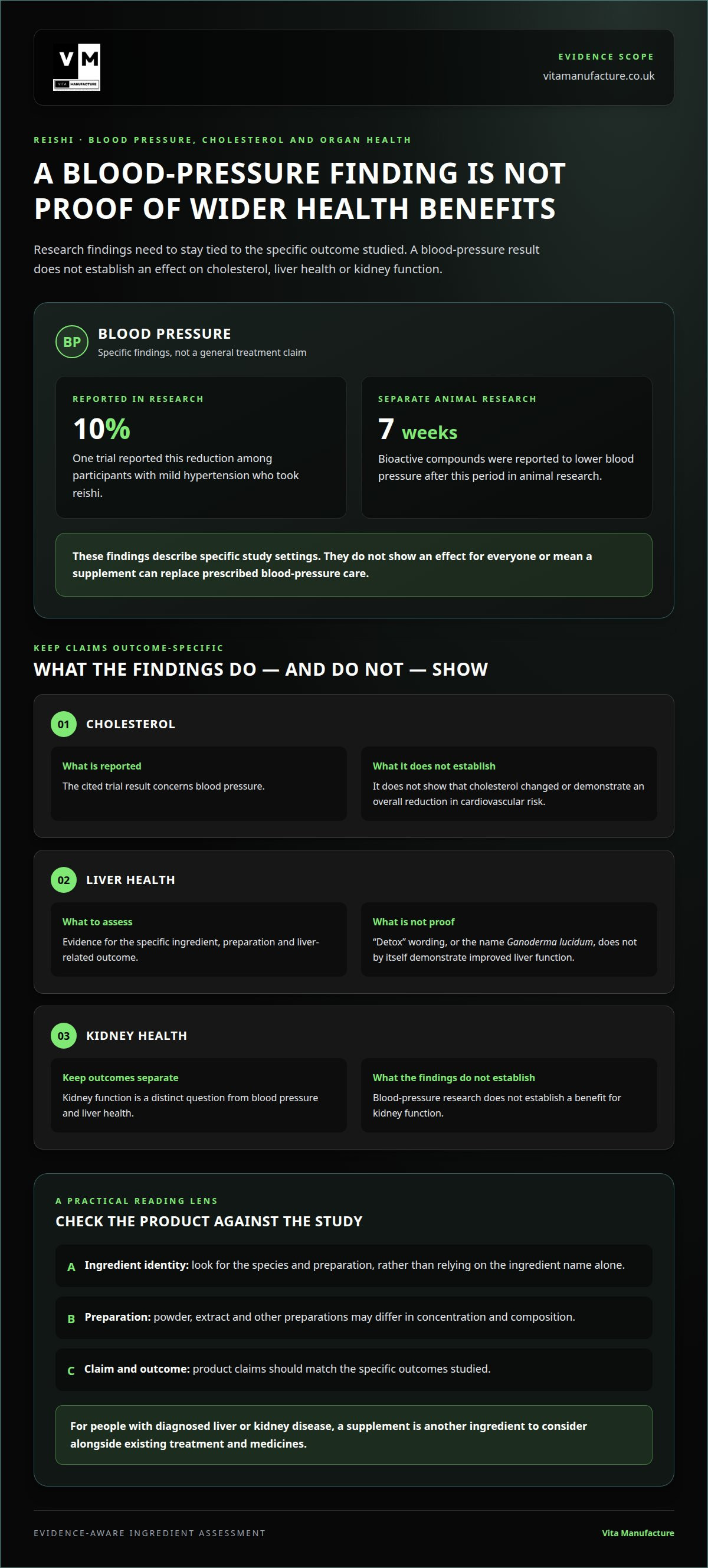
Research on cardiovascular health, cholesterol and organ function needs to be considered separately. A reported blood-pressure finding doesn't establish that reishi prevents disease or supports liver and kidney health.
Blood pressure findings include animal research in which bioactive compounds lowered blood pressure after seven weeks of use. One trial reported a 10% reduction among participants with mild hypertension after taking reishi. These findings describe specific study settings, not a treatment recommendation. They also don't establish an effect for everyone, or show that a supplement can replace prescribed blood-pressure care.
For heart health, blood pressure is only one part of the picture. The reported trial result doesn't show that cholesterol changed or demonstrate an overall reduction in cardiovascular risk. A product claim about cholesterol therefore needs evidence specific to cholesterol outcomes, rather than an assumption based on blood-pressure research. People with low blood pressure or concerns about blood clotting should consult a healthcare provider before use.
Liver health is another distinct question. The liver processes substances in the body, but the word "detox" in a supplement description doesn't demonstrate improved liver function. Ganoderma lucidum is a name associated with reishi; it doesn't, by itself, indicate a particular effect on the liver. Assess liver-support claims against evidence for the specific ingredient, preparation and outcome, not general wellness language.
The same distinction applies to kidney health. Blood-pressure findings don't establish a benefit for kidney function, and liver-related claims can't be applied to another organ. For someone with a diagnosed disease affecting the liver or kidneys, adding a supplement introduces another ingredient to consider alongside existing treatment and medicines.
Formulation details also shape how a study relates to a product. Powder, extract and other preparations may differ in concentration and composition, so the ingredient name alone can't show that they're equivalent. Product information should identify the species and preparation clearly, and claims should match the outcomes studied. Production methods and serving directions matter too: they help define what the finished supplement contains and how it is intended to be used.
For a brand developing a product around this ingredient, careful supplement formulation planning can help connect the ingredient choice with a clear, evidence-aware product concept.
Traditional use and immune-system support
Traditional practice helps explain interest in reishi, while research examines specific immune responses. Keeping these evidence types distinct helps readers assess what supplement claims can reasonably mean.
Traditional use of reishi
In traditional Chinese medicine, reishi has been used for hundreds of years to support a healthy immune system. Its use in China extends over 2,000 years. That history offers cultural context, rather than clinical proof of a particular outcome. For readers, the distinction matters: traditional use can explain why an ingredient is valued, but it cannot establish that a modern supplement improves immune health.
Immune function and its changes
Immune function describes how the body recognises and responds to potential threats. Age-related changes in immune responses are known as immunosenescence. Polysaccharides, including beta glucans, are thought to influence immune activity. Cytokines are signalling molecules that help coordinate communication between immune cells. These mechanisms are studied as biological processes, but a change in a marker alone doesn’t demonstrate fewer infections or improved health.
Laboratory studies report that reishi can stimulate natural killer cells, which target abnormal cells, including cancerous cells. This is a laboratory finding, not evidence that a supplement prevents or treats cancer. A human supplementation study examined use over 4 weeks. Its duration alone doesn’t show that immune function improved or establish a meaningful clinical outcome.
Evidence-based health benefits
Evidence-based assessment considers the outcome measured, study design and relevance to people. A 2016 Cochrane review considered reishi alongside cancer treatment across five randomised trials. This context is important: the review examined use alongside treatment, not as a replacement or cure. It doesn’t establish that the mushroom treats cancer on its own.
One study reported that 65% of cancer patients using red reishi experienced improved quality of life. Quality of life is meaningful, but it differs from tumour response, survival or cure. The finding is a reported patient outcome, not proof of anticancer efficacy. It also doesn’t show that every person using a supplement will experience the same change.
Polysaccharides and beta glucans are proposed contributors to immune activity, but preparations and products can differ. Laboratory cell responses, patient-reported outcomes and clinical results answer separate questions. A change observed in immune cells, for example, doesn’t automatically mean someone has fewer infections. An ingredient’s identity and preparation also affect how closely it resembles the material examined in a study.
When assessing immune-support claims, distinguish traditional use from laboratory mechanisms and human outcomes. Claims about cancer prevention or treatment need especially careful interpretation. People taking immunosuppressant medicines should seek medical advice before using a supplement, since these medicines affect immune activity.
Fatigue, stamina and cellular energy
Fatigue research on Ganoderma lucidum examines reported wellbeing, stamina and cellular energy. These outcomes are related, but they measure different things. Feeling less tired doesn’t automatically demonstrate improved physical endurance or resolve a chronic fatigue condition. When assessing supplement claims, consider the study participants, preparation and measured outcome, since these shape what its findings can support.
One study involving 132 people reported less fatigue and better overall wellbeing after eight weeks of use. That result provides a specific timeframe and participant group, not a universal expectation. It also doesn’t establish that the same effects apply to people with chronic fatigue syndrome, whose symptoms and care needs differ. The study’s reported outcome was fatigue and wellbeing, rather than proof of a cure or a replacement for clinical care.
A separate study involved 48 people recovering from breast cancer. After four weeks, reishi powder was associated with reduced fatigue and improved quality of life. Recovery from breast cancer is a particular context, so the finding should not be generalised to every cause of tiredness. Quality of life also covers more than energy alone. This example shows why the population and outcome both matter when interpreting a supplement study.
Cellular energy research looks at ATP, a molecule cells use to transfer energy. Reishi compounds have been reported to increase ATP production by up to 29%. That figure describes a reported biological effect, not a 29% increase in stamina or daily energy for supplement users. Ganoderma’s proposed adaptogen properties are also discussed in relation to stress, but this label doesn’t establish treatment for ongoing fatigue.
Stress, mood and tiredness can overlap in everyday life. Someone sleeping poorly during a demanding period, for example, may feel less alert the following day. Research findings about mood or wellbeing therefore don’t prove a direct effect on chronic fatigue. Study duration matters too: the reported fatigue findings used four- and eight-week periods, which can’t by themselves establish lasting effects beyond those study windows.
Use these distinctions to assess claims: identify whether the evidence concerns fatigue, mood, ATP or quality of life; note the population and duration; and compare those details with the product’s stated ingredients. Reishi’s compounds and preparation affect what a supplement contains. A reported study effect isn’t a guarantee for an individual, and side effects remain relevant when considering any supplement, particularly alongside existing treatment or medicines.
Reishi’s appearance, species and natural habitat
Identifying this medicinal mushroom starts with its cap, growing environment and species name. These details give ingredient sourcing a clearer foundation than colour or a broad wellness claim alone.
The fungus is typically kidney-shaped, red-coloured and found in hot, humid locations. Its cap measures 5 to 20 centimetres across, and it releases spores through small pores rather than gills. Those visible features can help distinguish it from familiar gilled mushrooms, but appearance alone doesn’t establish the identity of a dried powder or extract.
Ganoderma lucidum is a name associated with reishi, also known as lingzhi. Six types are described: red, purple, green, white, yellow and black. Ganoderma oregonense and Ganoderma tsugae are also referred to as reishi. These names matter for sourcing because a common name can cover more than one species. Precise identification helps clarify what an ingredient is intended to contain.
Reishi’s natural range includes Europe, Asia and North America, and it was originally found in China, Japan and Korea. The fungus grows on hardwoods, including maple, oaks and elms. Knowing the host tree and growing region adds useful context about an ingredient’s origin and helps distinguish the mushroom’s natural habitat from commercial cultivation conditions.
Colour is only one part of identification. A red cap may be visually recognisable, but dried material and extracts need clear species and ingredient descriptions. Format matters too: whole mushroom, powder and extract are not interchangeable terms. An extract is a prepared ingredient, while powder describes a physical form; neither term alone explains the source species or compounds present.
That distinction matters when interpreting research. Studies report that polysaccharides and triterpenes in the mushroom can reduce oxidative damage by up to 29%, an antioxidant finding. It doesn’t mean every species, powder or extract has the same composition or effect. Connecting a study to a product requires attention to the named species and preparation, not simply a shared common name.
For a product concept, carry these identifiers through the ingredient description and label wording. Clear naming helps customers understand whether the ingredient is a mushroom powder or extract, and which species it refers to. If you’re developing a supplement label around a defined ingredient, shape clear supplement label information around those details.
Vita Manufacture
Vita Manufacture can help turn ingredient research into a clearly defined supplement concept. If you’re considering a product based on reishi, the next step is to connect your intended format, ingredient identity and customer proposition with a practical development plan.
Through New Product Development, Contract Manufacturing and Private Label Supplements, Vita Manufacture supports brands in developing and producing supplements. The right route depends on whether you’re shaping a new formulation or building a brand around an existing product. Clear ingredient descriptions and considered label design help communicate what the product contains without overstating what research suggests.
When you’re ready to discuss your product direction, contact Vita Manufacture to explore the next steps.
Turn your ingredient concept into a clear product direction
The next step is to decide what role a reishi ingredient should play in your brand. A focused product brief can connect the intended audience, format and positioning, so formulation choices support a coherent proposition rather than a collection of disconnected claims.
Vita Manufacture can support that journey through New Product Development, Contract Manufacturing and Private Label Supplements. The right starting point depends on whether you’re shaping an original concept, arranging production or developing a product under your brand. Establishing those priorities early gives the project practical direction and a clearer basis for decisions as it progresses.
Bring your goals, preferred product format and ingredient direction into the conversation. Discuss your supplement concept with Vita Manufacture and take the next step towards building a considered product for your brand.
Frequently Asked Questions
What Is Reishi?
Reishi is a woody fungus also known as lingzhi and Ganoderma lucidum. It grows on hardwood trees and is used as a supplement ingredient, often as a powder or extract. The mushroom contains polysaccharides and triterpenes, compounds studied for potential biological effects. Traditional use and current research are different kinds of evidence, so neither should be read as proof that reishi treats a health condition.
How Can The Mushroom Be Used?
The mushroom is used in supplements and can also be prepared as tea. Its tough, bitter fruiting body is generally less suited to eating as a meal. One tea method uses 3 to 5 grams of dried slices with 4 cups of water, simmered for 45 to 60 minutes. Tinctures and capsules offer other formats, but their serving directions differ, so follow the product label rather than transferring amounts between forms.
What is an Adaptogen?
Adaptogen is a term used for substances thought to help the body respond to stress. Reishi is sometimes described this way, but the label doesn’t define a specific dose or establish a treatment effect. A product marketed for stamina, for example, may not have evidence measuring everyday energy in its users. Consider the ingredient, study outcome and product claims separately, rather than treating “adaptogen” as a guarantee of an effect.
Why is reishi called 'mushroom of immortality'?
The phrase “mushroom of immortality” reflects the fungus’s longstanding cultural reputation, not a demonstrated ability to extend life. Lingzhi has been used in traditional Chinese medicine for hundreds of years, and its use in China extends over 2,000 years. The evocative name can help explain its historical significance, but it isn’t a clinical result. Read it as a traditional nickname, not as a promise about longevity or health.
What is reishi mushroom (Ganoderma lucidum), and what is it used for?
Ganoderma lucidum is a species name associated with reishi, a fungus used in traditional practices and sold as a food supplement. Products may use dried mushroom, powder or extract. Research on reishi is still developing, so its possible effects should not be taken as proof that it treats or prevents disease. The intended use and preparation should be clear on the product label.
What is the recommended reishi dosage, and how long can it be taken?
There is no single amount that applies across every preparation. Suggested daily amounts include 3 to 15 grams of dried fruiting body and 1 to 3 grams of concentrated extract powder or capsules. Clinical studies have generally used 1.5 to 5 grams daily, divided into servings. Labels may use extract ratios such as 10:1; follow the product directions and ask a healthcare professional about duration, especially if you take medicines.
What is the difference between reishi mushroom powder, extracts, capsules and tea?
Powder describes a ground ingredient, while an extract is processed to concentrate selected constituents; an extract ratio on the label helps describe that concentration. Capsules are a delivery format and may contain powder or extract. Tea is made by simmering dried slices in water, so its preparation and serving size differ. These formats aren’t directly interchangeable, and labels should specify the ingredient and directions.