Magnesium Malate Benefits: A Formulation Guide
The potential magnesium malate benefits are best understood in context: magnesium contributes to normal muscle function, but that does not establish a unique effect from this particular form. Magnesium malate is magnesium combined with malic acid, a compound found in apples and other fruits. It may interest people considering magnesium supplements, but it does not guarantee a specific result.
If you’re weighing whether it suits your needs, the details matter. The amount of elemental magnesium, digestive tolerance and any medicines you take all shape the decision.
This guide explains what magnesium malate is, what evidence says about muscle function and digestion, and which side effects and medication interactions to consider. You’ll have a clearer basis for assessing the formulation and its place in a supplement product plan.
Table of Contents
What Is Magnesium Malate, and Does It Have Benefits?
Magnesium malate combines magnesium with malic acid, a compound found in apples and other fruits. Its connection to energy metabolism helps explain its appeal, but does not prove a specific effect on fatigue.
Cellular energy production
Cellular energy production is how cells generate ATP, the energy source they use to function. Malic acid plays a role in the Krebs cycle, a series of reactions involved in producing ATP. This connection helps explain why magnesium malate is discussed in relation to energy. On its own, however, it does not show that taking the supplement increases energy or reduces fatigue.
Magnesium and malic acid in energy metabolism
Magnesium and malic acid have distinct roles in energy metabolism: magnesium supports bodily processes, while malic acid participates in the Krebs cycle. Combining them creates magnesium malate, but those roles do not establish that this form produces better results than other forms of magnesium. The practical question is whether the formulation, dosage and amount of elemental magnesium suit an individual’s needs.
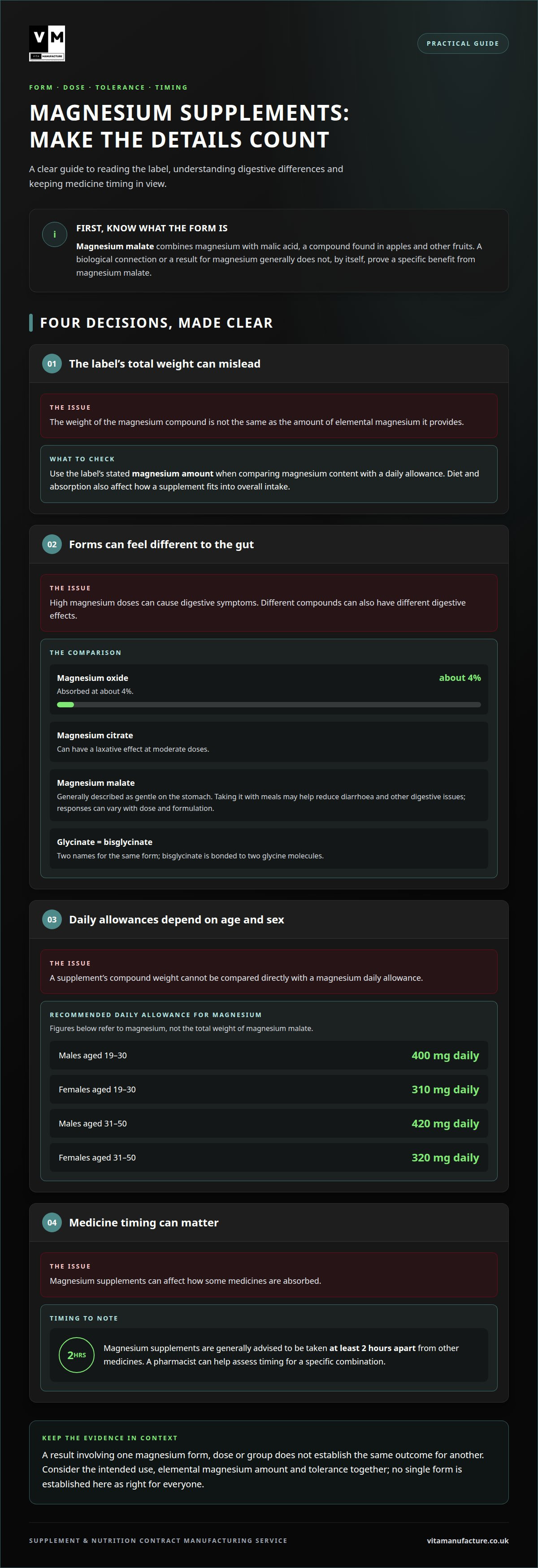
Recommended daily allowances vary by age and sex. National Institutes of Health Office of Dietary Supplements gives males aged 19-30 a recommended daily allowance of 400 mg daily. National Institutes of Health Office of Dietary Supplements gives females aged 19-30 a recommended daily allowance of 310 mg daily. National Institutes of Health Office of Dietary Supplements gives males aged 31-50 a recommended daily allowance of 420 mg daily. National Institutes of Health Office of Dietary Supplements gives females aged 31-50 a recommended daily allowance of 320 mg daily. These figures refer to magnesium, not the total weight of magnesium malate.
That distinction matters when you read a supplement label. The compound’s total weight and its elemental magnesium amount are not interchangeable. The label’s stated magnesium amount is the relevant figure when comparing magnesium content with a daily allowance. Absorption and diet also affect how a supplement fits into a person’s overall intake.
A 4-week study involving 25 volleyball players found that 350 mg of magnesium daily reduced lactate production and improved jump and arm-swing performance. The finding concerns magnesium supplementation; it doesn’t establish that magnesium malate caused those outcomes. Study participants, exercise demands and the supplement form all matter when interpreting results for someone considering a product for energy or exercise.
Magnesium malate is sometimes described as naturally energising, which is why daytime use may be suggested. That description does not prove it treats fatigue or reliably changes energy levels. The Krebs cycle provides a biological rationale for interest in malic acid, but study findings need to be considered in relation to the formulation actually tested.
Magnesium supplements and digestive tolerance
Magnesium supplements differ in form, magnesium content and digestive effects. These differences can influence how a product fits alongside meals, medicines and an individual’s routine.
Digestive tolerance of supplements
Digestive tolerance describes how comfortably someone handles a supplement, including whether it causes loose stools or discomfort. High magnesium doses can cause digestive symptoms, so the amount taken matters. Magnesium malate is generally described as gentle on the stomach, and taking it with meals may help reduce diarrhoea and other digestive issues. Responses can still vary with dose and formulation.
Comparing magnesium supplement types
Magnesium supplements use different compounds, which can affect absorption and digestive tolerance. Magnesium oxide is absorbed at about 4%, whilst magnesium citrate can have a laxative effect at moderate doses. Magnesium glycinate and magnesium bisglycinate are two names for the same form; bisglycinate is bonded to two glycine molecules. These distinctions help explain why forms aren’t interchangeable for every purpose.
Evidence on magnesium supplementation needs to be read in context. A result involving one form, dose or group does not establish the same outcome for another. Findings about magnesium oxide, for example, cannot automatically demonstrate an effect from magnesium malate. Research on magnesium’s role in energy production also does not prove that a particular supplement improves an individual’s energy or ability to exercise.
Choosing a magnesium supplement
Choosing a supplement means weighing its form, elemental magnesium amount and intended use together. The compound’s total weight is not the same as its elemental magnesium content, so the label’s stated magnesium amount is a useful comparison point. Consider digestive tolerance too: citrate may have a laxative effect, while malate is generally described as gentle. A suitable dosage depends on the individual and their wider intake.
Medication timing is another practical consideration. Magnesium supplements can affect how some medicines are absorbed, so they’re generally advised to be taken at least 2 hours apart from other medications. This is especially relevant if a daily medicine schedule leaves little room between doses. A pharmacist can help assess timing for a specific medicine and supplement combination.
For a new formulation, choose ingredients to match the intended use, elemental magnesium target and tolerance profile. A product development plan can also account for how the compound and dosage will be presented to consumers. Evidence about magnesium and malic acid supports careful formulation decisions, not assumptions that one form will suit everyone.
Muscle function and exercise recovery
Magnesium contributes to normal muscle function and supports normal psychological function. Research on muscle discomfort includes different forms of magnesium, so the specific formulation matters when interpreting results.
Muscle discomfort and fibromyalgia
Fibromyalgia is a condition associated with widespread pain and tenderness, and studies have examined magnesium alongside malic acid. In a 2-month study, 24 people took tablets containing 50 mg of magnesium and 200 mg of malic acid, twice daily. Researchers reported reduced pain and tenderness. The study was small, and its findings don’t establish magnesium malate as a treatment.
A separate study involving 80 women found that 300 mg of magnesium citrate per day for 8 weeks was associated with fewer fibromyalgia symptoms and tender points than a control group. This evidence concerns magnesium citrate, not magnesium malate. No specific magnesium form is proven to treat fibromyalgia, so these results should not be read as proof of a malate-specific effect.
Muscle recovery
Muscle recovery is the return to normal function after exercise-related demands. Magnesium is involved in muscle contractions and nerve function, making it relevant to how muscles work during activity. Those roles do not show that a supplement accelerates recovery. A study using magnesium citrate, for example, cannot establish the same effect for malate or magnesium glycinate.
Exercise findings need careful interpretation. A study’s magnesium form, dose and participants shape what its results can tell you. The earlier volleyball study involved magnesium supplementation, but it does not establish a specific recovery effect from magnesium malate. For an individual considering supplementation, elemental magnesium and overall intake are practical factors to discuss when deciding dosage.
Muscle health
Muscle health involves coordinated contractions and communication between nerves and muscles. Magnesium plays a role in these functions, as well as maintaining a steady heartbeat and supporting bone health. These roles explain why the mineral matters beyond exercise, but they do not demonstrate that taking extra magnesium improves muscle function when someone’s intake is already adequate.
Magnesium glycinate is often favoured for relaxation and easing muscle tension, while magnesium malate is associated with malic acid and energy metabolism. These descriptions do not establish one form as best for every person or purpose. If muscle discomfort or fatigue persists, consult a healthcare professional to consider possible causes, medicines and whether supplementation fits your needs. A supplement cannot replace an assessment of ongoing symptoms.
Side effects and medication interactions
Magnesium malate can cause digestive effects, and supplements can interact with medicines. Possible side effects and risks include loose stools, digestive discomfort and, at excessive intakes, magnesium toxicity.
Digestive effects
Digestive effects are changes such as loose stools or discomfort after taking a supplement. They matter because they can affect whether a product suits your routine. Magnesium malate is generally described as gentle on the stomach, and taking it with meals may help reduce digestive issues. Loose stools may occur at very high doses exceeding 600 mg at once.
Both dose and formulation matter. Magnesium citrate can have a laxative effect at moderate doses, while magnesium malate is generally described as well tolerated. High supplemental intake can still contribute to diarrhoea or discomfort. When considering intake, the amount of elemental magnesium matters, not the compound’s total weight.
Possible side effects
Possible side effects are unwanted effects that can follow magnesium supplementation, particularly at high doses. According to National Institutes of Health Office of Dietary Supplements, magnesium doses over 5,000 mg per day have been shown to cause toxicity, which can include low blood pressure, facial flushing, muscle weakness and heart problems. These effects are different from ordinary digestive discomfort.
Magnesium supports normal muscle function, but taking more does not mean better results. Consider the magnesium in your diet and other supplements when assessing total intake. A supplement label’s elemental magnesium amount distinguishes the mineral dose from the full weight of magnesium malate.
Contraindications and precautions
Contraindications and precautions are health factors that can make supplement use riskier or require closer attention. Kidney or heart issues call for caution before using magnesium malate supplements. People with heart conditions should consult a healthcare provider before taking magnesium supplements, because their health circumstances affect how supplementation should be considered.
Keep the product’s stated dosage and your overall magnesium intake in view. Combining more than one magnesium supplement can increase total intake without making the purpose clearer. If a new side effect appears after starting a product, discuss its timing, the dose and any other medicines with a healthcare professional.
Medication interactions
Medication interactions occur when magnesium affects how a medicine is absorbed or used. Magnesium supplements are advised to be taken at least 2 hours apart from other medicines. Antibiotics require particular attention: separate them from magnesium by 2-4 hours. Bisphosphonates should be separated from magnesium by 2 hours.
These intervals make timing part of safe supplement use, not a minor label detail. If your medication schedule makes separation difficult, a pharmacist can help you plan doses around it. Include prescribed medicines and other supplements in that conversation, since each can affect the practical timing of magnesium intake.
Potential health benefits of magnesium malate
Magnesium supports over 300 health-related reactions in the body, according to the National Institutes of Health Office of Dietary Supplements. That broad role explains interest in magnesium supplements, but it doesn’t show that every compound produces the same effects. For magnesium malate, the key distinction is between evidence about magnesium generally and research using this specific compound.
Malic acid occurs naturally in fruits such as apples and participates in the Krebs cycle, which helps cells produce energy. Magnesium also contributes to normal bodily functions, including muscle activity. Together, these roles provide a biological rationale for studying magnesium malate. They do not establish that the compound treats fatigue, depression or another health condition.
Research on mood illustrates why the formulation matters. A study of 23 older adults with diabetes and low magnesium found that 450 mg of magnesium every day improved depression symptoms over 12 weeks. The reported comparison was with an antidepressant, but the finding concerns magnesium supplementation, not magnesium malate. It cannot establish the same action for a different compound or for people with different health circumstances.
A study of 8,894 adults found an association between very low magnesium intake and a higher risk of depression. Separately, a review of 27 studies linked higher magnesium intake with decreased depression symptoms. These findings address magnesium intake, not a specific supplement form. An association or review of varied studies also doesn’t demonstrate that magnesium malate prevents or treats depression.
Other reported findings concern different outcomes. One article reports a 13% reduction in colorectal adenomas for every 100 mg/day increase in magnesium intake. This concerns intake, not magnesium malate supplementation, and shouldn’t be taken as proof that the compound prevents colorectal cancer. The distinction matters: evidence about a mineral, a food pattern or another magnesium form doesn’t automatically transfer to this compound.
For formulation decisions, match proposed claims to the evidence. Magnesium glycinate, for example, is a different compound and should not be treated as interchangeable evidence for malate. Consider the intended use, elemental magnesium amount and study population behind any proposed benefit. This keeps potential magnesium malate benefits in proportion to what research has actually examined.
If you’re developing a supplement concept, align its formulation and claims with the evidence for its ingredients. Develop a private label supplement with a clear formulation rationale and intended use.
Vita Manufacture
Vita Manufacture can help turn a considered supplement concept into a product, connecting formulation decisions with practical development and manufacturing. If you’re exploring magnesium malate, start by defining the intended audience, product purpose and how the formulation will be presented responsibly.
Through Supplement Product Development, Custom Supplement Manufacturing and Private Label Supplements, Vita Manufacture supports founders and established brands developing supplement products. This can help when you’re moving from interest in an ingredient towards a clear product brief, or planning production for an existing brand.
Contact Vita Manufacture to discuss your supplement project and its next steps.
Turn formulation thinking into a clear next step
A supplement concept becomes more actionable when its purpose, audience and formulation rationale align. For magnesium malate, decide how the ingredient fits the intended product and ensure any proposed benefits are framed around relevant evidence. A clear rationale can guide development choices and give your team a stronger foundation for shaping the product.
Potential magnesium malate benefits are only one part of a viable concept. Consider how the formulation supports your brand’s wider offer, what information customers need to make informed decisions, and how the product could progress from an idea towards production. Vita Manufacture can help develop that direction into a practical plan for your business.
Ready to explore what comes next? Discuss your supplement concept with Vita Manufacture and take a considered step towards bringing it to market.
Frequently Asked Questions
What dosage is appropriate?
There isn’t one magnesium malate dose that suits every adult. Account for magnesium from food and other supplements, then compare the total with the product’s elemental magnesium amount. Age, health and medicines can also affect the decision. A healthcare professional or qualified nutritionist can help assess an appropriate dosage, particularly if you have a health condition or already take magnesium in another product.
What is the best type of magnesium?
The best type depends on your intended use and how you tolerate different forms. Magnesium malate is often associated with energy metabolism; magnesium glycinate is often favoured for relaxation and muscle tension. Magnesium citrate can have a laxative effect. These differences can help narrow your choice, but they do not establish one form as best for everyone. Compare the elemental magnesium amount and the formulation’s purpose.
When is the best time to take magnesium supplements?
Take magnesium malate during the daytime if you’re following the suggestion that it may feel energising, and consider taking it with a meal for digestive tolerance. Timing also matters with medicines: separate magnesium supplements from other medication by at least 2 hours. Antibiotics may require a 2-4-hour separation, whilst bisphosphonates should be separated by 2 hours. Follow medicine-specific advice if timings conflict.
Why not other forms for energy?
Other forms may be relevant, but their evidence and characteristics differ. Malic acid participates in the Krebs cycle, which helps cells generate energy, giving malate a rationale for energy-focused formulations. That mechanism alone does not show that malate improves energy more than another form. Research findings apply most directly to the form studied, so evidence about magnesium generally should not be treated as a direct comparison between supplement types.
What is magnesium malate and how does it work?
Magnesium malate is formed by combining magnesium with malic acid, which occurs naturally in fruits such as apples. The body uses malic acid in the Krebs cycle, a process involved in cellular energy production. Magnesium also supports normal bodily functions. These roles explain the interest in the combination, but do not prove that taking it will increase energy or address a health condition.
What health benefits of magnesium malate are supported by evidence?
Evidence supports magnesium’s broad role in the body more clearly than benefits unique to magnesium malate. The National Institutes of Health Office of Dietary Supplements states that magnesium supports over 300 health-related reactions. Findings involving magnesium intake or other forms don’t establish the same outcome for malate. When assessing a proposed benefit, look for research using magnesium malate itself and an outcome relevant to the product’s intended use.
Does magnesium malate help with fatigue, muscle pain or fibromyalgia?
It hasn’t been established as a treatment for fatigue, muscle pain or fibromyalgia. A study involving 24 people with fibromyalgia reported reduced pain and tenderness after 2 months of tablets containing magnesium and malic acid. This small study doesn’t prove that magnesium malate treats fibromyalgia. Persistent fatigue or pain needs assessment of possible causes, rather than relying on a supplement to explain or resolve symptoms.
How much magnesium malate should adults take, and what is the elemental magnesium content?
Adults should base dosage on elemental magnesium, not the total weight of the magnesium malate compound. The elemental amount is the magnesium contribution shown on a supplement label, and it can differ between products. There isn’t one dose for every adult. Consider diet, other supplements and medicines when assessing total intake, and seek personalised guidance if you have a health condition.