Guide to Formulating Glycine Supplements
Glycine is generally well tolerated in normal amounts, although higher doses may cause gastrointestinal discomfort. If you’re considering a glycine supplement, weigh its potential benefits against possible side effects and consider how it may fit alongside any medicines you take.
The evidence for glycine’s effects on sleep, relaxation, brain health and exercise is not well defined. Sleep studies have been small, involving fewer than 20 people, so their findings need context. This guide explains glycine’s roles in the body, what research suggests about its potential effects, and what to know about side effects and medicine interactions. You’ll also find practical context for understanding supplement formulations, helping you assess the evidence and safety considerations before making a decision.
Table of Contents
1. Evidence for sleep, relaxation, brain health and exercise
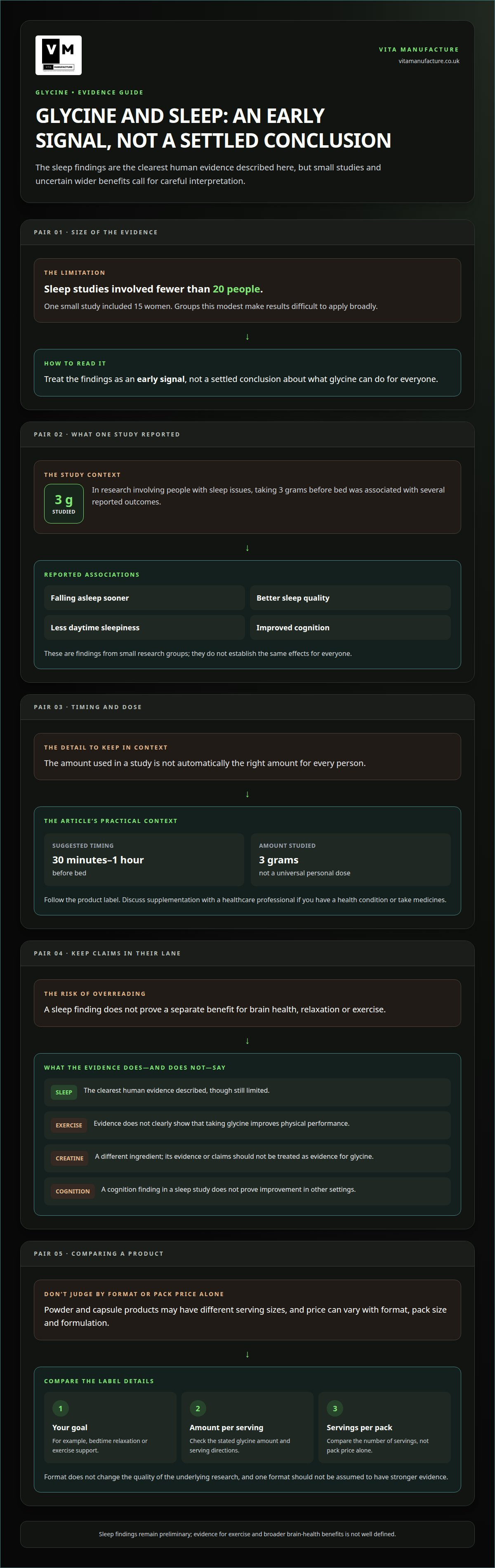
Sleep is where glycine has its clearest, though still limited, human evidence. Studies exploring sleep involved fewer than 20 people, and one small study included 15 women. These modest groups make the findings difficult to apply broadly. They offer an early signal, not a settled conclusion about what a glycine product can do for everyone.
In research involving people with sleep issues, taking 3 grams before bed was associated with falling asleep sooner, better sleep quality, less daytime sleepiness and improved cognition. Those outcomes suggest a possible connection between glycine and how rested people feel the next day. However, the benefits of supplementation for sleep, relaxation, brain health and physical performance remain poorly defined. A sleep-related finding doesn’t establish a separate benefit for brain health.
For sleep, the suggested timing is 30 minutes to 1 hour before bed. That window places intake close to bedtime, rather than earlier in the day. The studied amount was 3 grams, but a study dose isn’t automatically the right amount for every person. Follow the product label, and discuss supplementation with a healthcare professional if you have a health condition or take medicines.
Claims about exercise need particular care. Glycine is an amino acid, but evidence does not clearly show that taking it improves physical performance. Creatine is a different ingredient, so evidence or claims about creatine should not be treated as evidence for glycine. For brain health, a sleep study’s cognition finding is relevant, but it does not prove that glycine improves cognition in other settings. The same distinction matters when assessing a formula’s intended use and claims.
In the UK, a glycine supplement’s price varies according to factors such as format, pack size and formulation. Compare the stated glycine amount per serving and the number of servings, rather than relying on pack price alone. Powder and capsule products may have different serving sizes, so check the label to assess what each provides.
For a practical review, start by identifying your goal, such as bedtime relaxation or exercise support. Then compare the product’s stated serving and directions with that purpose, without assuming one format has stronger evidence. How a glycine supplement is produced does not change the quality of the underlying research: sleep findings remain preliminary, while evidence for exercise and broader brain-health benefits is not well defined.
2. Can glycine have side effects?
Glycine is considered well tolerated in normal amounts, but that does not mean every dose suits everyone. Higher doses may cause gastrointestinal discomfort. This is the clearest side effect described for glycine, so note any digestive symptoms and stop taking it if they occur. Don’t treat findings from high-dose studies as a reason to take more; they do not establish a suitable personal dose.
Studies have used up to 90 grams of glycine per day over several weeks without serious side effects. That finding describes the amounts and duration used in those studies; it isn’t a recommended intake or proof that very high doses are safe for everyone. A more practical safety step is to follow the product label and avoid combining products without checking their ingredients and serving amounts.
People who are pregnant or lactating, or receiving treatment for a medical condition, should consult a medical practitioner before use. If you have a known allergy to glycine or an ingredient in a particular product, avoid it until you’ve received medical advice. If you suspect an allergic reaction after taking it, stop use and seek prompt medical help. Check the full ingredient list, not just the front label.
Glycine’s biological roles can prompt questions about metabolism, liver function and antioxidant effects. The body uses three amino acids, including glycine, to make glutathione, an antioxidant compound. This role does not show that taking extra glycine improves liver function or prevents disease. Distinguish the body’s production of a compound from the effects of a supplement.
A study involving more than 4,000 subjects found that higher glycine levels were correlated with cardiovascular protection and better metabolic health. Correlation does not show that supplementation caused those outcomes. Nor does this finding establish glycine as a treatment for heart or metabolic conditions. People managing either concern should discuss supplements with their healthcare professional rather than using a glycine supplement as a substitute for care.
When considering taste or anxiety, assess the specific product and its intended use. Powder and capsule formats differ, but taste preference alone does not indicate safety or effectiveness. Glycine’s potential effects on relaxation and sleep are not proof that it treats anxiety. If you experience an unwanted effect, record the product, amount and symptoms; this can support a focused discussion with a medical practitioner.
3. Does glycine interact with medicines (drug interactions)?
Before considering a glycine product, review your medicines and supplements with a healthcare professional. Advice is particularly important if you take psychotropic medicines. Discuss glycine before using it alongside seizure medicines, clozapine or memantine. Share your health conditions and the full list of products you use, including combination supplements.
Glycine’s role in the body helps explain why it appears in supplement formulations. It is an amino acid used to build proteins and regulate brain signals. These normal functions do not establish that taking extra glycine will improve brain health or change how a medicine works. For example, a product claim about relaxation should not replace a conversation about a prescribed medicine.
Glycine also contributes to the body’s production of glutathione. The body uses three amino acids, including glycine, to make this antioxidant compound. This biological role alone does not establish a health benefit from taking a supplement. A mechanism involving protein or antioxidant production does not prove a health outcome.
Powder and capsule formats differ in how you measure and take a serving. A powder listing gives a serving of approximately 2 grams mixed with 50 millilitres of water. Measure powder with an appropriate device and follow the product label. Capsules provide a set amount per unit, but combination ingredients matter: one listing contains 650 milligrams of L-glycine and 33 milligrams of D-ribose per capsule.
In research, the standard daily amount used is about 3 to 5 grams. This describes study use, not an individual recommendation. A listed powder serving of 2 grams, for example, may not equal the amount used in a particular study. Check the amount of glycine per serving, the number of servings directed, and whether other active ingredients are included.
For UK products, use the label to identify ingredients, serving directions and the amount of glycine provided. Assess health-benefit wording separately from ingredient information: a claim is not proof that glycine treats a condition or works with your medication. Formulation also affects what each serving contains, so compare the stated composition rather than relying on the word “glycine” alone.
If you’re developing a product, clear ingredient and serving information gives consumers a practical way to understand its formulation. Be precise about the distinction between glycine’s roles in protein building and brain signalling, amounts used in studies, and any product claims. This clarity matters especially when a formula combines glycine with other ingredients or is intended for people who may also use medicines.
4. Glycine’s roles in the body
Glycine has several roles beyond its use in supplements. The body naturally produces this amino acid and uses it to build proteins. Proteins consist of amino acids arranged in chains, and glycine is one of their building blocks. It also helps regulate brain signals. These functions explain why glycine features in discussions of protein structure and nervous system activity, but they do not establish what extra glycine will do for an individual.
Collagen shows the scale of glycine’s contribution to one important protein. It can contain up to 30% glycine, and approximately one in three amino acids in collagen is glycine. This high proportion makes glycine a prominent component of collagen’s amino acid composition. It does not, on its own, show that taking glycine increases collagen or changes the effects of glycine on skin, joints or other tissues.
The body also uses glycine with two other amino acids to make glutathione. Glutathione is an antioxidant compound, and glycine contributes to its production as one of three building blocks. This is a biochemical role, not evidence that dietary glycine acts as a direct antioxidant treatment. Keeping that distinction clear separates a nutrient’s function in the body from clinical claims about supplementation.
Dietary sources include fish, meat and eggs. Most people are estimated to obtain about 2 grams of glycine a day from their diet, although food choices affect intake. This estimate offers context, not a personalised target. A food source also comes as part of a meal, while a supplement supplies glycine in a measured product serving.
Natural production is reported to begin slowing after age 30. That change provides context for interest in glycine, but age alone does not show that someone needs a supplement. The body’s own production, dietary intake and the reason for considering supplementation all matter when interpreting this point. It should not be treated as a diagnosis of deficiency.
A stated dietary amount is not necessarily the same as a clinical study dose. The research material gives 1.5 to 3 grams per day as a recommended amount of dietary glycine, while study use may differ according to the purpose being examined. Read those figures in context: one describes dietary intake, and the other concerns research protocols. Neither establishes a universal need for supplementation.
These roles offer a practical framework for evaluating product information. Protein building, brain-signal regulation, collagen composition and glutathione production are distinct functions. A label or formulation discussion should identify the intended source and amount of glycine, rather than suggesting that one biological role proves every claimed effect. This distinction supports clearer decisions about dietary intake and supplement use.
5. Possible medicine interactions
Review your medicines before adding glycine to your routine. Seek medical advice first if you take medication, especially psychotropic medicines. Discuss glycine with a healthcare provider before using it alongside seizure medicines, clozapine or memantine. These checks matter because medicine decisions involve your full treatment picture, not one ingredient in isolation.
Prepare a clear list for that discussion. Include prescription medicines, non-prescription products, vitamins and other supplements. Note the glycine product’s ingredients and serving directions, including whether it contains other active ingredients. Your healthcare provider can then consider your health conditions and the products you use together. Don’t stop or change prescribed treatment to accommodate a supplement.
Combination products deserve particular attention. Magnesium glycinate, for example, can increase the levels of both magnesium and glycine in the body. A product name may highlight magnesium while the ingredient panel also lists glycine. Review the whole label instead of relying on the front-of-pack name, and include the product when discussing medicines.
Food and drink are a separate consideration: no interactions between glycine and foods or drinks are known. That does not answer whether glycine is suitable alongside a medicine. Having a glycine product with water or a meal, for example, does not replace a medicine review, particularly if you take a psychotropic drug or one of the medicines named above.
Glycine has roles in protein production and brain signalling, but those functions do not establish how it will combine with a specific treatment. The same applies to discussions of glutathione, antioxidant activity or oxidative stress. A proposed effect on oxidative stress is not evidence of compatibility with clozapine, memantine or seizure medicines. Keep biological explanations separate from medicine-interaction advice.
If you’re pregnant, lactating or receiving treatment for a medical condition, consult a medical practitioner before using glycine. Share the product label and your current medicine list. This gives the practitioner specific information to consider, including the amount of glycine, additional ingredients and why you’re considering the product.
Good product information supports that conversation. Record the full product name, active ingredients, serving directions and any other supplements used. If you’re developing a product, clear labelling can help communicate ingredient details and appropriate cautions. Explore in-house label graphic design for a more legible presentation of supplement information.
Vita Manufacture
Vita Manufacture supports brands ready to develop a supplement product concept from glycine research. If you’re shaping a new formulation, Supplement Product Development can help progress the idea. Custom Supplement Manufacturing and Private Label Supplements offer routes for brands developing a product range.
Evidence about glycine’s potential effects is still developing, so a clear product concept matters. Define the intended audience, format and purpose, then consider how the formulation communicates its ingredients and use. Vita Manufacture can support your next step, whether you’re building a new brand or extending an established range.
To discuss your glycine supplement project, contact Vita Manufacture.
Turn a glycine concept into a clear product direction
Your next step is to turn a research interest into a focused product brief. Define who the product is for, the need it addresses and the format you want to explore. Then outline how its formulation and intended use should be communicated. A clear brief gives each development decision a shared purpose, from ingredient choices to how the product is presented to its audience.
For a brand planning a glycine supplement, connect the product concept to a credible rationale and a distinct place in its range. Vita Manufacture offers Supplement Product Development, Custom Supplement Manufacturing and Private Label Supplements to support brands progressing an idea towards production. The right route depends on whether you’re shaping a new formulation or building a product around an established concept.
Bring your priorities together before taking the next step: audience, product purpose, format and formulation direction. Discuss your glycine product plans with Vita Manufacture and explore a practical path for developing your concept. A well-defined brief is a strong foundation for moving forward with clarity.
Frequently Asked Questions
Can glycine have side effects?
Yes. Higher doses may cause gastrointestinal discomfort, while glycine is considered well tolerated in normal amounts. If you’re considering a glycine supplement, read the serving directions and don’t assume that amounts used in studies are personal recommendations. Note the product and serving if you experience unwanted effects. If you’re pregnant, lactating or receiving treatment for a medical condition, seek medical advice before use.
Is glycine safe?
Glycine is considered well tolerated in normal amounts, but that does not establish that every amount is suitable for everyone. Studies have used high doses, but study conditions do not make those amounts a recommended routine. Follow the product label. If you’re pregnant or lactating, receiving treatment for a medical condition, or taking medicines, discuss use with a medical practitioner or healthcare provider first.
What is glycine and how does it work in the body?
Glycine is an amino acid that the body uses to build proteins and regulate brain signals. It also contributes to collagen, where it can make up a substantial share of the amino acids. The body uses glycine alongside two other amino acids to produce glutathione. These are bodily functions, not proof that taking extra glycine will produce a particular health effect.
Can glycine be obtained from food or only from supplements?
Glycine comes from food and the body’s own production, so supplements are not its only source. Fish, meat and eggs are dietary examples. Food choices influence how much glycine you obtain from meals, while supplement labels show the amount in a serving. Consider your usual diet and the product’s directions together, rather than treating a supplement as a substitute for varied, balanced eating.
Can glycine cause anxiety?
Glycine’s role in regulating brain signals does not, by itself, show that it causes anxiety. Nor does a proposed relaxing effect establish glycine as an anxiety treatment. If you’re concerned about anxiety and considering supplementation, discuss the product with a healthcare professional, especially if you take psychotropic medicines. Include other supplements in that conversation, as combination products can contain additional active ingredients.
Does glycine interact with foods or drinks?
No interactions between glycine and foods or drinks are known. That statement concerns food and drink, not medicines, so it does not replace advice about combining glycine with prescribed treatment. If you use glycine powder, follow the label directions for preparing a serving. Also read the ingredient list: a product combining glycine with another ingredient may need to be considered differently from a single-ingredient product.
Does glycine interact with medicines (drug interactions)?
People taking medicines should seek medical advice before using glycine, particularly if they take psychotropic medicines. Discuss it before combining glycine with seizure medicines, clozapine or memantine. For a useful review, share the product label and a list of your medicines, health conditions and other supplements. This helps your healthcare provider consider the complete combination rather than assessing glycine in isolation.
How should I store glycine?
Follow the storage directions on the product label. Keep the container tightly closed in a cool, dry place, away from direct sunlight. Store it out of reach of children and pets. For powder, close the packaging promptly after measuring a serving and use a suitable measuring device. Keep the original label with the product so its ingredients and storage instructions are easy to refer to.