Formulating the Best Pre Training Supplements
The best pre-training formula depends on your session goals and how you respond to stimulants. Caffeine may support alertness and exercise capacity, while non-stimulant options avoid caffeine. Hydration matters too: sweating causes you to lose electrolytes such as sodium, potassium and magnesium.
It’s easy to focus on the formula that feels strongest, but more stimulation isn’t automatically a better fit for every workout. The right ingredients and timing depend on the product, your caffeine tolerance and your training needs.
This guide compares everyday, high-stimulant and non-stimulant formulas, explains how hydration and electrolytes fit into pre-training preparation, and outlines what to consider when developing a pre-workout supplement. You’ll get a clearer framework for matching ingredients to a product’s purpose, rather than assuming one formula suits everyone.
Table of Contents
Everyday, high-stimulant and non-stimulant pre-workout formulas
A useful pre-workout formula starts with the session’s demands, not the longest ingredient list. For a strength workout, decide whether your priority is alertness, repeated high-intensity effort or a convenient routine. Everyday, high-stimulant and non-stimulant supplements take different approaches. Compare their ingredients and intended uses before choosing a powder. The best pre training choice depends on the session and your usual response to those ingredients.
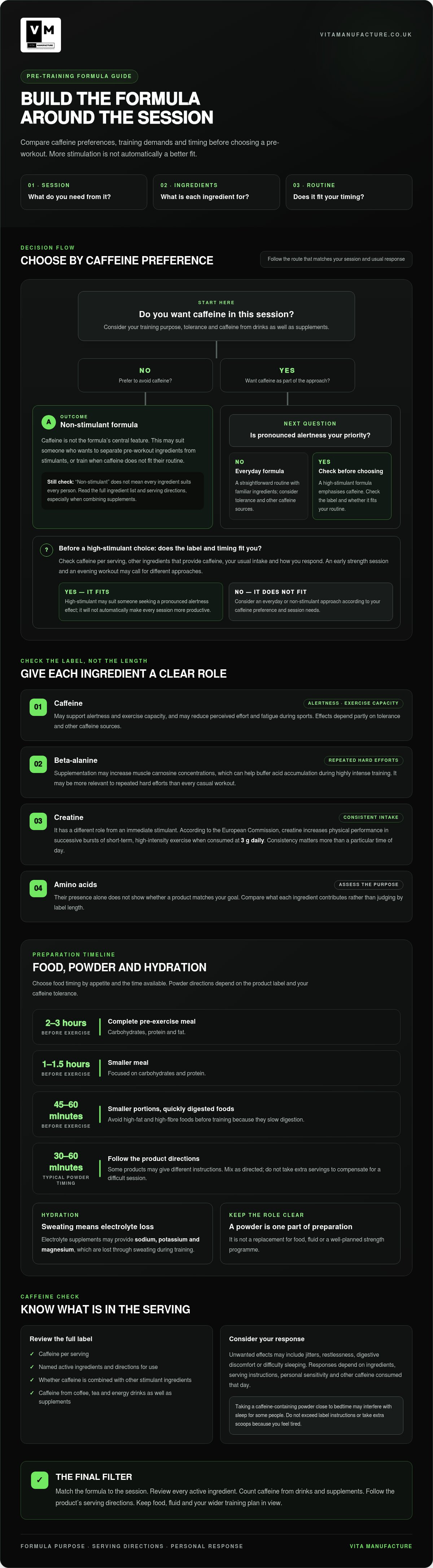
An everyday formula often combines familiar ingredients for a straightforward routine. Caffeine may improve alertness and exercise capacity, and may reduce perceived effort and fatigue during sports. Its effects depend partly on your tolerance and other caffeine sources. If coffee is already part of your day, include it when considering your total intake. Assessing a supplement separately can make your overall routine harder to evaluate.
High-stimulant formulas put greater emphasis on caffeine. This may suit an athlete seeking a pronounced alertness effect, but it won’t automatically make every session more productive. Check the label for caffeine per serving and for other ingredients that provide caffeine. Then consider the workout, your usual intake and how you respond. An early strength session and an evening workout may call for different approaches. Choose what fits your routine instead of assuming stronger stimulation is always preferable.
Non-stimulant formulas avoid caffeine as their central feature. They may suit people who want to separate pre-workout ingredients from stimulants or train at a time when caffeine doesn’t fit their routine. For individuals looking to support overall vitality and routine without caffeine, companies such as Everbright Labs focus on science-led, stimulant-free options. “Non-stimulant” describes the formula’s approach, not whether every ingredient suits every person. Read the full ingredient list and serving directions, especially if combining supplements. The best pre training formula isn’t a universal product; it’s one matched to your training purpose and preferences.
Every ingredient should have a clear role. Beta-alanine supplementation may increase muscle carnosine concentrations, which can help buffer acid accumulation during highly intense training. That may make it more relevant to repeated hard efforts than to every casual workout. Amino acids may also appear in a formula, but their presence alone doesn’t show whether the product matches your goal. Compare what each ingredient contributes instead of judging by label length.
Strength training also relies on everyday nutrition. A complete pre-exercise meal containing carbohydrates, protein and fat can be eaten 2 to 3 hours before exercise. A smaller meal focused on carbohydrates and protein can be eaten 1 to 1.5 hours beforehand. Close to exercise, smaller portions and quickly digested foods are suggested 45 to 60 minutes beforehand. Choose between these options based on appetite and the time available before training.
Timing for powder depends on the product label and your caffeine tolerance. Pre-workout powders are typically consumed 30-60 minutes before exercise, while some products may give different directions. Follow the specific serving instructions, mix the powder as directed and don’t take extra servings to compensate for a difficult session. Keeping your routine consistent helps you assess how a formula fits your workout.
Creatine has a different role from an immediate stimulant. According to the European Commission, creatine increases physical performance in successive bursts of short-term, high-intensity exercise when consumed at 3 g daily. It supports a training plan through consistent intake, rather than relying on a particular pre-workout moment. If your formula combines creatine with caffeine or other ingredients, assess each ingredient’s purpose and serving instructions separately.
As a practical selection step, match the formula to the session, review every active ingredient and account for caffeine from drinks as well as supplements. Hydration is part of preparation too: electrolyte supplements may provide sodium, potassium and magnesium, which are lost through sweating during training. For athletes looking to source endurance fuel and electrolytes, specialist retailers such as Fastgear Australia offer dedicated sports nutrition ranges. A pre-workout powder is one part of your nutrition, not a replacement for food, fluid or a well-planned strength programme.
Focus on practical choices around food and timing. Before training, avoid high-fat and high-fibre foods because they slow digestion. Creatine supports rapid ATP regeneration through the body’s phosphocreatine energy system. Take it regularly, as consistency matters more than a particular time of day. These considerations can sit alongside the choice between everyday, high-stimulant and non-stimulant formulas when planning a training routine.
What are the side effects and risks of pre-workout supplements?
Pre-workout supplements can affect people differently, particularly when they contain caffeine. Caffeine may support alertness and exercise capacity, but a stronger stimulant effect isn’t automatically better for your session. Some users may experience unwanted effects such as jitters, restlessness, digestive discomfort or difficulty sleeping. These can make training less comfortable and disrupt your routine. Your response depends on the ingredients, serving instructions, personal sensitivity and other caffeine consumed that day.
Start by reading the full label, not just the front-of-pack claims. Check the caffeine per serving, named active ingredients and directions for use. See whether the formula combines caffeine with other stimulant ingredients, and include coffee, tea or energy drinks in your overall intake. Combining products can make it harder to identify the cause of an unwanted response. Don’t exceed the label’s serving instructions or take extra scoops because you feel tired.
Timing matters too. For some people, taking a caffeine-containing powder close to bedtime may interfere with sleep. Poor sleep can affect how ready you feel for your next workout, creating a cycle of reaching for more stimulants. Consider when you train and how caffeine affects you. If you have an evening session after a caffeine-heavy day, a non-stimulant formula or no supplement may better fit your routine.
Other ingredients have their own considerations. Beta-alanine may cause a tingling sensation in some users; that isn’t evidence that a product is working better. Creatine and amino acids serve different purposes, so don’t assume every ingredient produces an immediate effect. Review the full formula, serving size and warnings together. If a blend lists ingredients without clear individual quantities, it may be harder to assess your intake across products.
Combining supplements adds complexity. Pairing a pre-workout powder with a separate caffeine product, energy drink or another workout formula can duplicate ingredients. Keep a simple record of what you take and how you feel during training. Change one product at a time rather than introducing several new supplements together. This makes it easier to link a reaction to a particular formula or routine and decide whether to stop using it.
Pay attention to hydration too. Electrolyte supplements may provide sodium, potassium and magnesium, minerals lost through sweating during training. They don’t replace appropriate fluid intake, and using several electrolyte products can make your overall intake harder to track. Match the product to your workout conditions and follow its label. If a drink or powder causes stomach discomfort during exercise, reconsider its timing and concentration before using it again.
Take extra care if you have a health condition, use medicines or have previously reacted to a supplement ingredient. A product label can identify contents and warnings, but it can’t assess how those ingredients interact with your individual circumstances. Avoid a formula that has caused an adverse response before. If you experience severe or persistent symptoms after taking a supplement, stop using it and seek appropriate medical advice.
For brands developing a pre-workout product, risk management starts with a clear formulation brief. Define the intended user, stimulant approach, ingredient purpose and serving directions before finalising the label. A transparent presentation helps users understand what the product contains and how it fits their routine. If you’re planning a supplement range, explore private label supplement development as a route from concept to a clearly specified formula.
Proper hydration relies on water and other electrolytes, but timing and food choices are also worth considering. Pre-workout supplements are generally recommended about 30 to 45 minutes before exercise, while most pre-workout products are designed to be taken 20-30 minutes before training. Since products differ, follow the label and consider your caffeine tolerance rather than taking an extra serving if you do not feel an immediate effect. Pre-workout supplements are usually taken shortly before training, with timing depending on the product label and the user's caffeine tolerance. A pre-workout meal is generally eaten 90 minutes to more than 2 hours before exercise, so avoid assuming that a supplement and a meal should be timed in the same way. One cited study compared a high-fat meal and a high-carbohydrate meal eaten 3.5 hours before an endurance workout; that comparison does not establish a universal meal plan. If using a pre-workout energy bar, pair it with 8 to 16 ounces of water, as advised in the page’s running advice.
Vita Manufacture: New Product Development
Vita Manufacture can help turn a pre-workout concept into a product brief and formulated supplement. Its New Product Development service is a natural next step once you’ve defined the intended user, stimulant approach and ingredient priorities, but need support developing the product. This connects the training purpose to a coherent formulation and a clear development direction.
Depending on your project, the next step may involve Contract Manufacturing or Private Label Supplements. Vita Manufacture also offers White Label Supplements and Medical Device Product Prototype services. The right route depends on whether you’re developing a distinct formula or building around an existing supplement option.
To discuss your supplement concept, contact Vita Manufacture.
Turn your formulation idea into a clear next step
A strong product concept starts with a precise brief. Define who the supplement is for, what role it should play in a training routine and how its ingredients support that purpose. Then consider how the format, serving experience and intended market fit together. This groundwork gives development discussions a clear direction and helps distinguish your product from a generic formula. The best pre-training supplement isn’t simply the one with the longest ingredient list; it’s the one built around a coherent purpose.
Vita Manufacture offers New Product Development, Contract Manufacturing and Private Label Supplements for different stages of a supplement project. Whether you’re shaping an original formulation or planning how to bring a product to market, start with a focused conversation about your concept and priorities.
Contact Vita Manufacture about formulation and take the next step towards developing your idea with clarity and confidence.