B2 Vitamin: Benefits, Formulations, and Industry Uses
The cooking method can change how much of the B2 vitamin remains in your food. Also called riboflavin, this nutrient supports the health of blood cells, the brain, skin and digestive tract. Boiling causes about twice as much B2 vitamin to be lost from food as steaming or microwaving.
If you’ve thought mainly about which foods provide riboflavin, that’s a useful starting point. Cooking choices can also affect the B2 vitamin content of a meal.
This guide covers food sources, cooking methods, deficiency and supplement safety, helping you make informed decisions about riboflavin in your diet.
Table of Contents
What are common food sources of riboflavin?
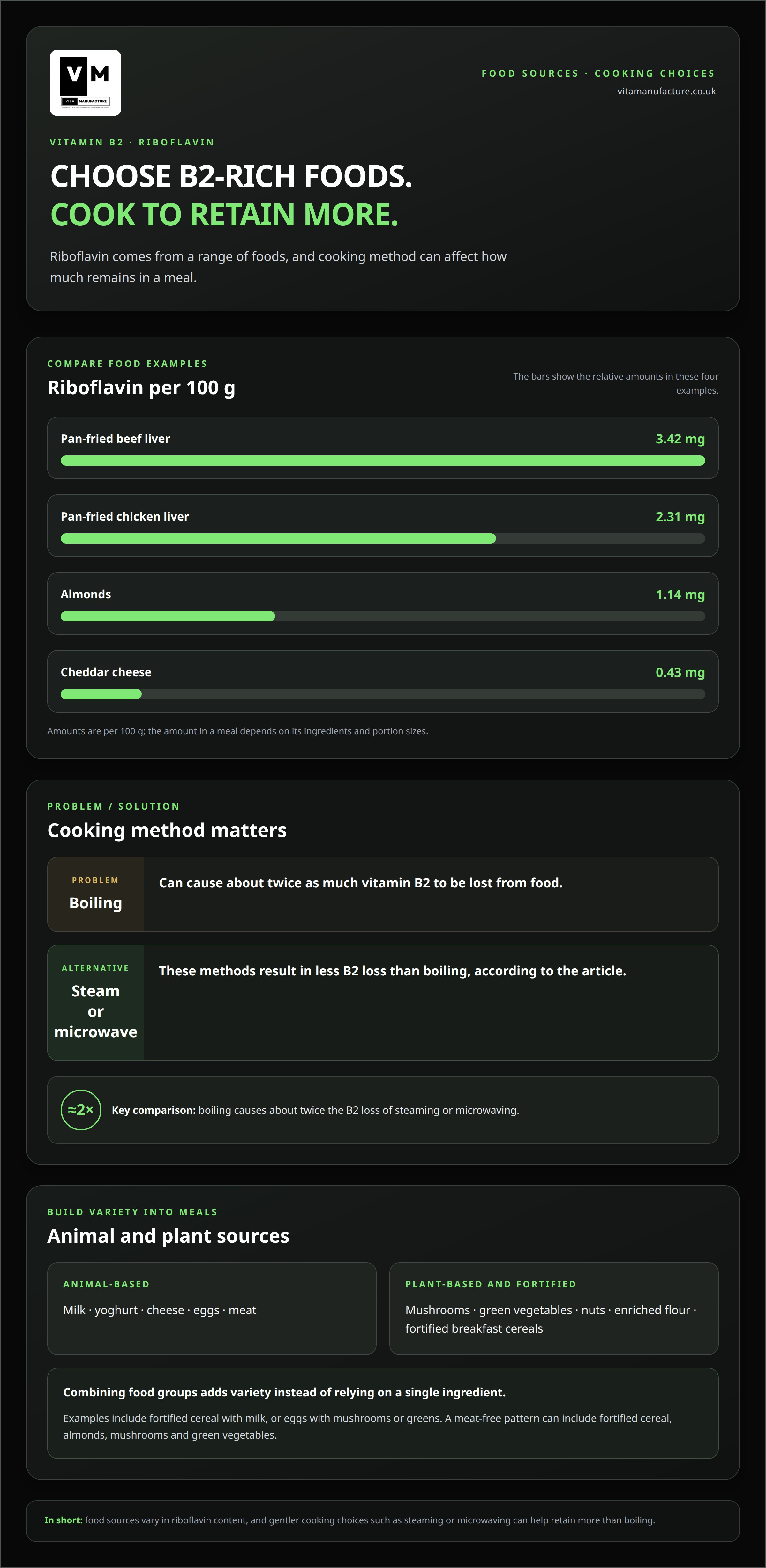
Riboflavin comes from both animal and plant foods. Milk, yoghurt, cheese, eggs and meat are animal-based sources. Mushrooms, green vegetables, nuts and enriched flour provide plant-based options, while fortified breakfast cereals can contribute too. Including foods from different groups adds variety instead of relying on a single ingredient.
Some foods contain more riboflavin per portion than others. Pan-fried beef liver contains 3.42 mg per 100 grams, while pan-fried chicken liver contains 2.31 mg per 100 grams. Almonds provide 1.14 mg per 100 grams, and cheddar cheese provides 0.43 mg per 100 grams. These examples show how amounts vary by food and serving.
Riboflavin also plays a role inside cells. The body converts it into two coenzymes, FMN and FAD, through successive actions by riboflavin kinase and FAD synthetase. FMN and FAD support redox reactions, in which enzymes transfer electrons during cellular processes. These reactions help release energy from food and support the metabolism of other micronutrients.
Pregnancy and lactation are life stages where intake recommendations differ. According to the NIH Office of Dietary Supplements, the recommended riboflavin allowance is 1.4 milligrams during pregnancy. According to the NIH Office of Dietary Supplements, the recommended riboflavin allowance is 1.6 milligrams during lactation. These figures can help frame a conversation about dietary intake during these stages.
Different food combinations can contribute riboflavin. Fortified cereal with milk provides two sources at breakfast. Eggs with mushrooms or greens combine animal and plant foods. For a meat-free pattern, options include fortified cereal, almonds, mushrooms and green vegetables. The amount in a meal depends on its ingredients and portion sizes.
Medicines may be relevant when considering nutrient intake. Interactions with riboflavin are not expected, but tell your healthcare provider about any medicines, herbs, non-prescription drugs and supplements you use. This context helps a professional consider your overall diet and any changes to your medicines.
Light exposure and food preparation can affect the riboflavin available from foods, so ingredients matter beyond their starting nutrient content. Milk, eggs, yoghurt and vegetables can all feature in varied meals, alongside fortified cereals. Choosing from these sources supports a practical, food-first approach to riboflavin intake.
What are the causes, signs, and symptoms of riboflavin deficiency?
Riboflavin deficiency means the body isn’t receiving or using enough vitamin B2. It can be described as primary or secondary, depending on the underlying cause. Primary deficiency relates to insufficient riboflavin in the diet. Secondary deficiency describes a problem affecting absorption or the body’s use of the nutrient. Both categories help explain why a B2 vitamin shortfall can arise through different routes.
Food intake is one part of the picture. A person who regularly excludes several riboflavin-containing food groups may have fewer dietary sources. Secondary causes involve a different pathway: the nutrient may be present in food, but absorption or use may be affected. This distinction matters when considering whether a B2 vitamin deficiency could relate to dietary choices or another factor.
Symptoms associated with riboflavin deficiency can affect the mouth, lips, skin and eyes. Examples include cracks at the corners of the mouth, sore or inflamed lips, a sore tongue, skin changes and eye irritation. These signs alone don’t establish the cause. Similar symptoms can occur for other reasons, so they need to be considered in a broader clinical context.
Riboflavin supports processes involved in blood-cell health, while iron is needed to make haemoglobin. A clinician assessing possible iron-deficiency anaemia may evaluate iron status separately from riboflavin intake. The nutrients have different roles, and signs associated with one deficiency don’t prove the other. Assessing them separately helps distinguish dietary patterns from other explanations.
Risk assessment starts with relevant details. A healthcare professional may ask about your usual meals, excluded foods, ongoing symptoms, medicines and supplements. Medicines matter because some may affect nutrient absorption. Explaining when symptoms began and any changes in your diet or medicines gives useful context for deciding what to assess next.
Diagnosis isn’t based on a single symptom or a meal pattern that looks normal. Assessment may combine reported symptoms, diet history, medical background and appropriate clinical tests. Results need to be interpreted in context, not treated as a stand-alone answer. A checklist can suggest useful questions, but it can’t identify the cause of symptoms on its own.
If symptoms persist, worsen or interfere with eating, arrange a clinical assessment rather than self-diagnosing. Bring details of relevant symptoms, dietary restrictions and medicines. That information can help a healthcare professional consider riboflavin deficiency alongside other nutritional or medical explanations, then recommend an appropriate next step. The name B2 vitamin may appear on food or supplement labels, but a label alone can’t diagnose deficiency.
Supplement safety and excess intake
Supplement safety depends on the amount consumed and the reason for taking it. Reference intakes, product strength and personal circumstances all matter.
Daily intake recommendations
A dietary reference intake is a benchmark for planning nutrient intake, not a supplement dose. It helps put the amounts in foods and products into context.
According to the NIH Office of Dietary Supplements, the recommended allowance for adults aged 19 years and older is 1.1 to 1.3 milligrams daily, depending on sex assigned at birth. This is an NIH reference, not a UK-specific recommendation. Children’s needs vary by age, so an adult amount shouldn’t be applied to them.
For adults and children in the UK, needs depend on age and life stage; the figures above provide an NIH reference point, not a UK intake target. Common supplements include tablets and gummies labelled with amounts such as 100 mg or 400 mg. UK prices vary with formulation, strength and pack size, so compare the labelled amount and serving directions rather than assuming products are equivalent.
Safety limits and excess intake
A tolerable upper intake level is the highest daily intake considered unlikely to cause harm. The US has not established one for riboflavin, but that doesn’t mean every supplement dose is suitable for everyone. Most riboflavin is used promptly, and excess is excreted in urine.
Supplement doses can greatly exceed dietary reference amounts. Riboflavin has been studied at doses ranging from 1.6 mg to 400 mg. Those study amounts don’t set a routine intake recommendation. Consider the amount per serving, how often you take it and any other supplements containing riboflavin. Bright yellow urine may occur and usually doesn’t require medical attention.
For migraine prevention, a randomised trial involving 55 adults used 400 mg daily for four months. Participants experienced two fewer migraine attacks per month than those receiving placebo. A systematic review reported benefit in trials using 400 mg daily for adults and 200 mg daily for children for three months. The American Academy of Neurology and the American Headache Society concluded riboflavin is probably effective for preventing migraine headaches.
These findings concern migraine prevention; they don’t establish benefits for other conditions. Discuss a high-dose regimen with a healthcare professional, particularly for a child or if you take medicines. Tell them about medicines, herbs, non-prescription drugs and dietary supplements you use. Possible allergic reactions include rash, itching, hives or swelling of the face, lips, tongue or throat. Seek urgent medical help if swelling affects breathing or swallowing.
Animal-based vitamin B2 sources
Animal foods offer several dietary sources of riboflavin, including dairy, eggs and meat. Plant foods also contribute, giving people different ways to include this nutrient in meals. The B2 vitamin content varies between foods, so a varied diet can draw on more than one source.
Vitamin B2 in animal foods
Animal-based sources are foods from animals that contain riboflavin. Milk, yoghurt, cheese, eggs and meat are familiar options for everyday meals. Beef and chicken liver are particularly concentrated sources, while dairy foods can be included at breakfast or as snacks. These foods are useful when planning meals around familiar ingredients and varied sources.
Eggs can feature at breakfast, while yoghurt or milk can accompany other foods. Meat and liver are options for lunch or dinner. The amount of riboflavin depends on the food and portion eaten, so don’t rely on one ingredient as your only dietary source. Children’s meals can include suitable versions of these foods as part of a varied diet.
Dietary food sources
Riboflavin comes from both animal and plant foods. This broader view can help people who avoid particular food groups or prefer variety. Plant-based examples include mushrooms, green vegetables, almonds, enriched flour and fortified breakfast cereals. A meal combining cereal and mushrooms draws on separate food sources.
You can spread sources across the day rather than concentrate them in one meal. Breakfast might include fortified cereal, lunch could contain green vegetables, and dinner might feature eggs or meat. These examples show how riboflavin can appear in different meals. The total amount depends on ingredients and portion sizes.
For people following a plant-based diet, fortified cereals, mushrooms, vegetables, nuts and enriched flour provide options without animal ingredients. Fortification means nutrients have been added to a food. Check the product’s nutrition information for its riboflavin content. Including a food in your meal plan doesn’t, by itself, establish whether your intake meets your individual needs.
Food preferences, allergies and medical conditions can affect which sources suit someone. For example, a person avoiding dairy might choose fortified cereal, almonds, mushrooms and green vegetables instead. Children may have different nutritional needs from adults, while disease or a restricted diet can affect food choices; consulting specialists such as Wise Eats Registered Dietitians can help tailor daily meals when navigating gastrointestinal issues and therapeutic diets. Migraine research involving riboflavin supplements is separate from choosing foods for everyday nutrition.
Combining suitable animal and plant foods is one practical way to broaden dietary sources. Milk, eggs, yoghurt or meat can sit alongside fortified cereal, mushrooms or greens. Considering several meals gives a clearer picture of where the B2 vitamin is present, rather than relying on one “best” food.
Effects of cooking on vitamin B2
Cooking can change how much riboflavin remains in food. The method matters, as does whether cooking liquid is discarded. When retaining this nutrient is a priority, consider steaming or microwaving rather than boiling.
Boiling causes about twice as much vitamin B2 to be lost from food as steaming or microwaving. This comparison makes the cooking method worth considering for vegetables and other foods prepared in water. It doesn’t mean boiling removes all riboflavin, or that every food loses the same amount. The effect depends on the food and how it’s prepared.
Water provides a route for riboflavin to leave food during cooking. If vegetables are boiled and the cooking water is poured away, some of the nutrient can go with it. A simple practical adjustment is to use less water where suitable, or include the cooking liquid in a soup or sauce. That keeps the liquid, rather than discarding it.
Steaming and microwaving are alternatives to boiling, and the comparison indicates lower losses. Steam broccoli or other vegetables until tender to avoid immersing them in a pan of water. Microwaving is another option. Choose the method that suits the ingredient and meal rather than assuming one technique works equally well for every food.
Light exposure matters too: riboflavin is sensitive to light. Storing milk in an opaque or covered container limits its exposure. This is separate from cooking, but shows why nutrient retention depends on handling as well as heat. Preparation and storage both affect what remains available from food.
Don’t confuse cooking effects with the effects of supplements. A meal prepared by steaming doesn’t establish a supplement’s benefits or side effects. Research into riboflavin for migraine prevention concerns supplement doses, not whether a cooking method prevents a headache. Food preparation alone also doesn’t provide evidence that riboflavin prevents cancer.
For everyday meals, choose steaming or microwaving when they suit the food, and reuse cooking liquid where practical. These are straightforward ways to reduce avoidable losses without changing the ingredients. For brands translating nutrient information into clear on-pack communication, explore supplement label design.
In a migraine trial, the beneficial effect of riboflavin did not begin until after the first month. This timing relates to the trial, not to the effects of cooking food.
In the United States, riboflavin side effects can be reported to the FDA at 1-800-FDA-1088. These points concern supplement use rather than the choice of cooking method.
Vita Manufacture
Vita Manufacture can help turn an understanding of riboflavin into a supplement concept for your brand. If you’re developing a formula or planning a product range, New Product Development can support the process from concept to product. Private Label Supplements and White Label Supplements offer options for shaping a supplement range, while Contract Manufacturing supports production.
The next step depends on your project, whether you’re refining an idea or preparing to bring a product to market. Defining the product concept and intended audience helps shape the development process. To explore how your supplement idea could take shape, contact Vita Manufacture.
Turn nutritional insight into a product direction
A strong supplement concept starts with a clear purpose. If you’re considering a vitamin B2 product, define who it’s for, what need it addresses and how the formulation fits your wider range. Those decisions can guide development without overstating what the nutrient can do.
Vita Manufacture offers New Product Development, Contract Manufacturing and Private Label Supplements for brands at different stages, from shaping an idea to planning production. The right route depends on your product goals and where you are in the development process.
Use your understanding of riboflavin as a starting point for a focused commercial plan. Discuss your vitamin B2 product plans with Vita Manufacture and take the next step with clarity and confidence.
Frequently Asked Questions
What is vitamin B2?
Vitamin B2 is riboflavin, a water-soluble vitamin involved in normal cellular processes. The body converts it into coenzymes that help enzymes carry out reactions, including those involved in energy metabolism. You get it through foods and supplements. A varied diet can include different sources, while a supplement’s role depends on your diet, health needs and the product’s directions.
Does riboflavin improve health in people with a MTHFR polymorphism?
A MTHFR polymorphism alone doesn’t show that taking riboflavin will improve your health. Riboflavin contributes to enzyme activity, but that doesn’t establish a specific benefit for everyone with a genetic variant. Don’t treat a genetic result as a diagnosis or supplement recommendation. If you’re considering riboflavin because of a test result or symptoms, discuss the result, your medicines and current supplements with a healthcare professional.
Does riboflavin improve iron deficiency anaemia?
Riboflavin isn’t a replacement for iron treatment for iron-deficiency anaemia. The nutrients have different roles, and the cause of anaemia needs to be assessed rather than inferred from symptoms alone. If you’ve been diagnosed, follow your treatment plan and discuss persistent symptoms or supplement use with your healthcare professional. Don’t take a high-dose supplement as a substitute for prescribed iron.
What is riboflavin?
Riboflavin is the scientific name for vitamin B2. It’s a nutrient found in foods and used by the body to form coenzymes called FMN and FAD. Those coenzymes help enzymes perform essential reactions. The name may appear on food labels or supplement packaging, so recognising “riboflavin” helps you identify vitamin B2 even when the label doesn’t use the vitamin number.
What is this medication?
Riboflavin medication is a product containing vitamin B2, used according to its packaging or prescription directions. It may be supplied as a tablet, and the appropriate amount depends on the reason for use and the person taking it. Follow the directions provided with your product, and tell a healthcare professional about other medicines, herbs and supplements you use before starting it.
What is vitamin B2 (riboflavin) and what does it do?
Vitamin B2, or riboflavin, helps the body make FMN and FAD, coenzymes involved in enzyme reactions. These reactions contribute to energy metabolism and the processing of other nutrients. Riboflavin also supports the health of blood cells, the brain, skin and digestive tract. It’s one part of overall nutrition, not a stand-alone treatment for a health condition.
What foods are high in vitamin B2?
Useful food sources include dairy foods, eggs, meat, mushrooms, almonds, green vegetables and fortified breakfast cereals. A practical approach is to combine sources across meals, such as fortified cereal at breakfast and vegetables later in the day. Check the nutrition information on fortified products, as added nutrient amounts vary. This can help you compare options that suit your usual eating pattern.
What are the symptoms and causes of vitamin B2 deficiency?
Possible symptoms include cracks at the corners of the mouth, sore lips or tongue, skin changes and eye irritation. Causes may include too little riboflavin in the diet or issues affecting its absorption or use. These symptoms can have other explanations, so they don’t confirm a deficiency. If they persist, seek clinical advice and share relevant details about your diet, medicines and supplements.